

Pelvic Floor Physiotherapy for Stress Urinary Incontinence: Support for Leaks With Coughing, Sneezing, and Movement
May 30, 2026
Post Motor Vehicle Accident Concussion Treatment: Rehab Options After a Crash
June 30, 2026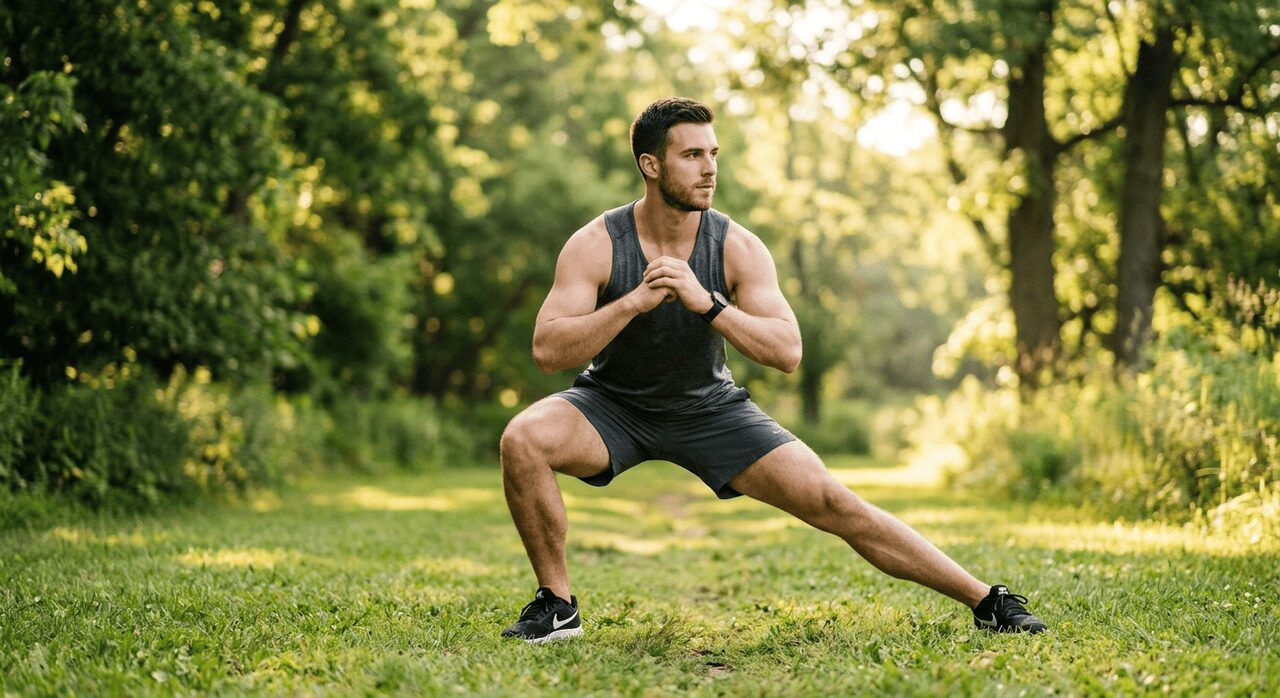
TL;DR
Physiotherapy for ACL tears addresses strength, coordination, and movement confidence through a staged, individualized plan rather than a generic list of exercises. Your first visit focuses on understanding your injury, your goals, and what your knee is ready for today. Return to sport follows clear milestones based on strength, movement quality, and readiness, not a fixed calendar.
───────────────────────────────────────────────────
Walking into a physiotherapy clinic with an unstable knee and a head full of questions is not easy. You are likely wondering whether your knee will ever feel solid again, whether surgery is inevitable, and how long you are going to be sidelined from the sport or activity that matters to you. Those concerns are completely understandable.
This post walks you through what ACL rehab actually involves, what your first appointment might feel like, how exercises progress over time, and what a realistic path back to sport looks like. The goal is to give you a clearer picture before you walk through the door, so you feel informed rather than anxious.
What Does an ACL Tear Feel Like, and Why Does Rehab Feel Intimidating?
An ACL (anterior cruciate ligament) tear often produces a sharp sensation at the time of injury, followed by swelling, a sense of instability, and sometimes a feeling that the knee is giving way during basic movements like walking, pivoting, or descending stairs. According to the Mayo Clinic, ACL injuries frequently occur during sports that involve sudden stops, changes in direction, or landing from a jump.
The physical symptoms are one thing. The emotional side is another. Many people arrive at physiotherapy worried about several things at once:
• Whether moving the knee will make things worse
• Whether they are going to need surgery and what that process involves
• How long recovery will take and what that means for training, competition, or daily life
• Whether generic exercises will even make a difference
These are valid concerns, and addressing them is part of the process. Physiotherapy for ACL tears is not about pushing through pain, performing high-level drills before your knee is ready, or following a one-size-fits-all protocol. It is a step-by-step plan built around your knee’s current state, your body’s movement patterns, and what you are working toward.
What Happens at Your First Physiotherapy Visit?
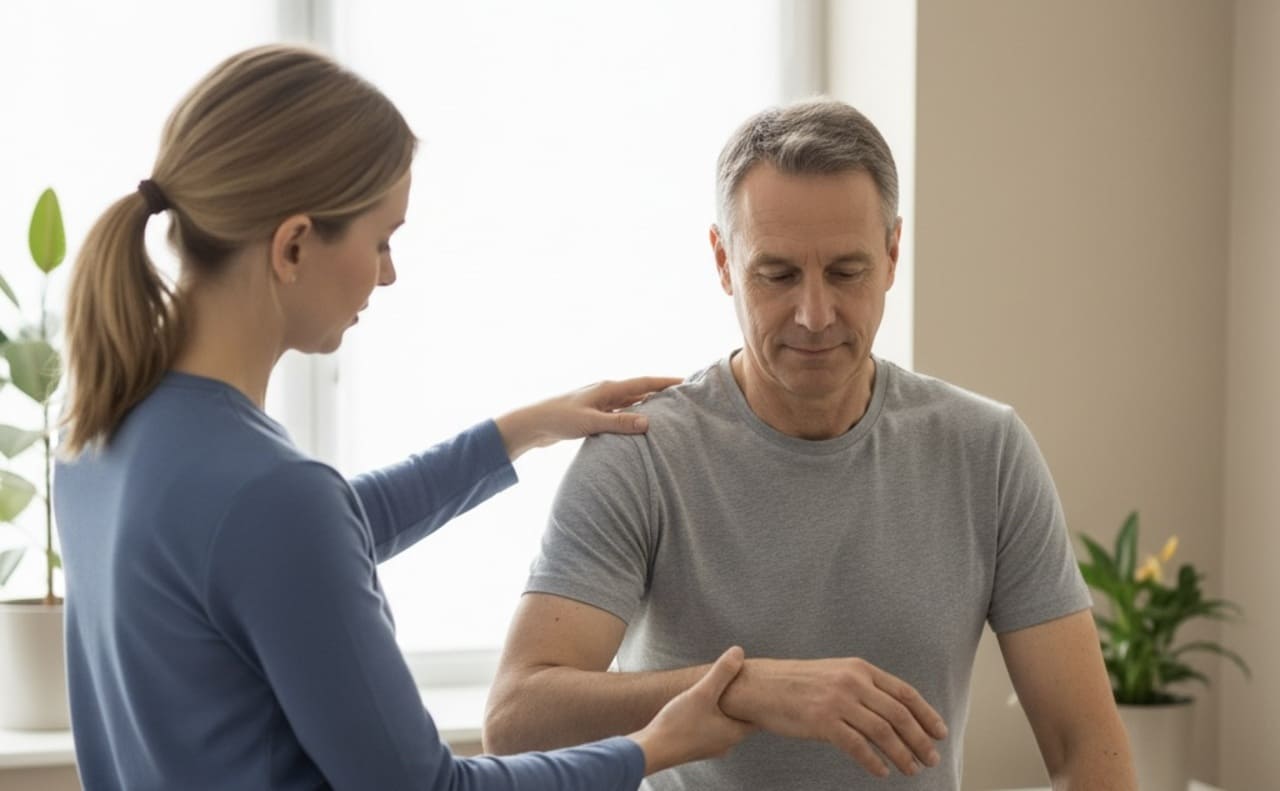
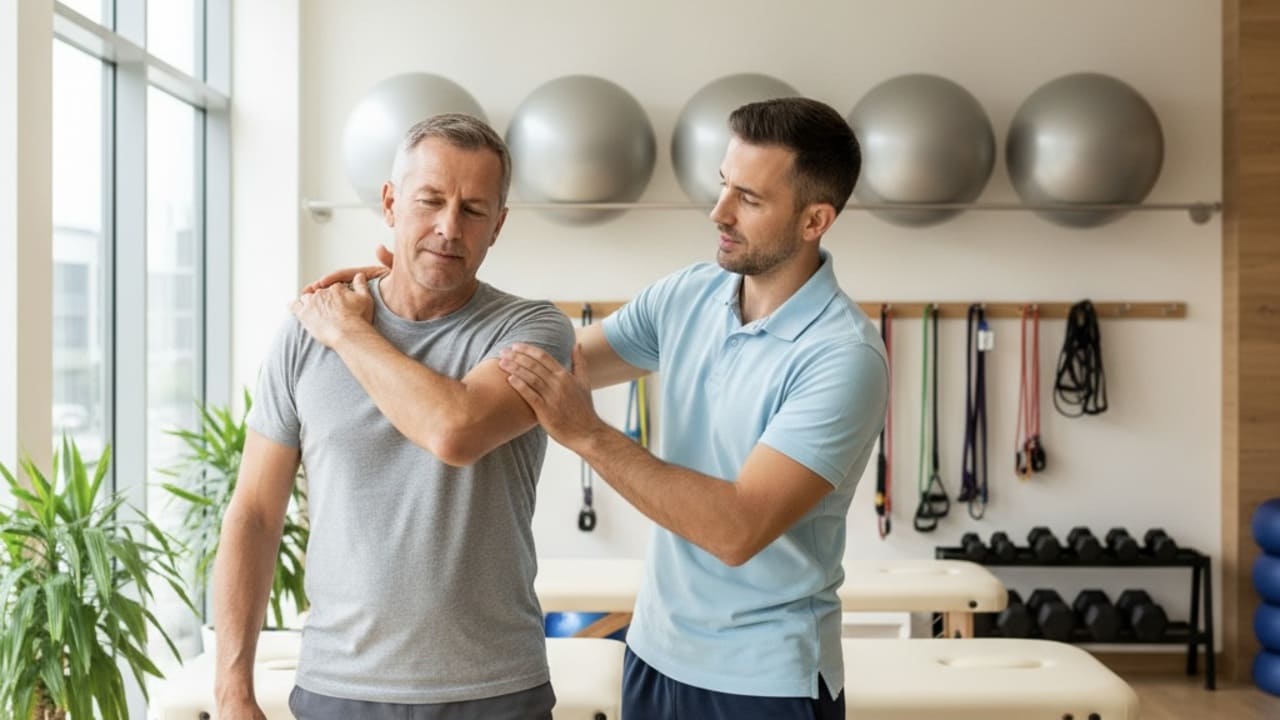
Your first visit is a conversation as much as it is an assessment. Before anything physical happens, the focus is on understanding you: how the injury occurred, what your symptoms are now, what daily activities feel limited, and what you are hoping to get back to.
From there, the physical assessment looks at several things:
• Swelling and how the knee is managing load
• Range of motion, both how far the knee bends and straightens and how comfortable that range feels
• Walking mechanics and how your body compensates around the injury
• Basic strength in the quadriceps, hamstrings, and hip muscles
• Balance and how the knee responds to single-leg loading
• Your confidence levels with movement, which genuinely matters in ACL rehab
If your knee is swollen, irritated, or significantly limited in motion, the first session is not going to involve complex drills. The assessment shapes what comes next. I would take time to explain what the findings mean, why certain movements feel the way they do, and what the initial steps look like so nothing feels like a mystery.
If you are dealing with a knee injury and want to understand more about what physiotherapy assessment involves, our page on physiotherapy services at Burnaby Heights Physio gives you a starting point.
What Are the Building Blocks of ACL Tear Rehab Exercises?
Early ACL tear rehab exercises focus on calming the knee down, restoring comfortable range of motion, improving walking mechanics, and rebuilding basic strength before adding load or complexity. Jumping straight into heavy strength work when the knee is still swollen and irritated does not serve the tissue or your confidence.
Rehab exercises tend to fall into categories that build on each other over time:
| Category | Purpose | Example Movements |
|---|---|---|
| Quadriceps control | Restore quad activation and knee extension strength | Quad sets, straight-leg raises, terminal knee extensions |
| Hamstring strengthening | Support knee control during deceleration and landing | Bridges, hamstring curls, Romanian deadlift patterns |
| Hip strength | Improve load absorption and knee alignment | Clamshells, hip hinges, lateral band walks |
| Calf and ankle strength | Support lower leg mechanics during push-off and landing | Calf raises, single-leg calf work |
| Balance and control | Rebuild proprioception and joint awareness | Step-downs, single-leg balance, controlled landing practice |
Hamstring strengthening for ACL rehabilitation deserves particular attention. Research published on PubMed supports the role of the hamstrings in protecting the knee during dynamic activities. The hamstrings function as a secondary stabilizer of the knee joint, helping to control tibial movement during deceleration, cutting, and landing. Exercises like bridges, prone hamstring curls, and Romanian deadlift patterns address this function in a progressive way.
These are examples to discuss with your physiotherapist rather than a self-directed program. The right starting point depends on your knee’s current state, not a general template.
Is Knee Stability About More Than Strength?
Yes, significantly more. Strength is essential, but an unstable-feeling knee after an ACL tear is often also influenced by timing, balance, movement patterns under fatigue, and how the entire lower body absorbs and transfers force.
Knee stability exercises for ACL tears address this by training the nervous system alongside the muscles. This is sometimes called neuromuscular coordination training, which in plain terms means teaching the knee, hip, ankle, and core to work together accurately and efficiently during real movement demands.
Practically, this looks like:
• Single-leg balance with progressive challenge (eyes closed, unstable surfaces, added movement)
• Controlled step-downs to practice loading the knee with good alignment
• Landing mechanics practice, starting with two-leg landings and progressing to single-leg
• Change-of-direction preparation, working on how the hip, knee, and trunk align under lateral force
• Trunk and hip control work, because knee alignment is often driven by what happens above the knee
A key point from the research: studies from the National Institutes of Health highlight that neuromuscular training programs are associated with meaningful improvements in knee stability and movement quality during ACL rehabilitation. Progress is measured by the quality of your movement, your symptoms during and after sessions, your strength output, and your confidence, not by the number of weeks on a calendar.
For more on how physiotherapy addresses knee-related movement concerns, our knee pain physiotherapy page covers the broader picture.
How Does Return to Sport After an ACL Tear Work Without Rushing the Process?
Return to sport after an ACL tear is a staged process, not a single decision. Moving too quickly through the stages increases re-injury risk, while a clear progression gives you defined milestones to work toward.
A typical staged approach looks like this:
1. Restoring comfortable daily function: walking, stairs, basic movement without compensation
2. Building a strength foundation: adequate quad, hamstring, and hip strength relative to the uninjured side
3. Running preparation: straight-line jogging, progressing to faster running as symptoms allow
4. Jumping and landing: two-leg landing mechanics, progressing to single-leg and reactive landings
5. Cutting and change-of-direction drills: planned, then reactive, at increasing speeds
6. Sport-specific exposure: practice scenarios, training loads, and competitive readiness
Return-to-sport planning often includes strength testing (comparing injured to uninjured limb), hop testing for power and symmetry, movement quality assessment under fatigue, and a direct conversation about psychological readiness. Fear of re-injury is common and worth naming openly. Gradual exposure to the movements and demands of your sport is part of addressing that fear in a structured way.
Timelines vary based on injury severity, whether surgery is involved, your sport’s specific demands, any previous injuries, and how your body responds at each stage. A physiotherapist helps you identify where you are in that process and what the next step requires.
If your injury involved surgical reconstruction, our page on post-surgical rehabilitation physiotherapy outlines what that recovery pathway involves.
What If Surgery Is Part of the Conversation?
Not every ACL tear requires surgery, and not every surgical candidate needs to operate immediately. Some people pursue non-surgical rehabilitation successfully, particularly if they are not returning to high-demand pivoting sports. Others work alongside a physician or surgeon to weigh reconstruction based on their injury details, sport demands, and activity goals.
Physiotherapy plays a role in both situations. Before surgery, physiotherapy supports range of motion, reduces swelling, builds strength, and prepares the knee so the post-surgical recovery starts from a stronger baseline. This is sometimes called “prehabilitation.” After surgery, physiotherapy guides the tissue healing, progressive loading, and return-to-sport process through the same staged principles described above.
A physiotherapy visit is not a commitment to any one path. It is a way to understand what your knee is doing right now, what your options involve, and what questions are worth bringing to your medical team. Feeling informed before those conversations makes a real difference.
Key Takeaways
• Physiotherapy for ACL tears follows a staged plan built around strength, coordination, and movement quality rather than time alone.
• Your first visit involves assessment of swelling, range of motion, strength, balance, and your goals before any exercise program begins.
• Hamstring strengthening is a clinically supported priority in ACL rehab because the hamstrings help control knee movement during deceleration and directional changes.
• Knee stability depends on neuromuscular coordination across the hip, knee, ankle, and core, not strength alone.
• Return to sport follows defined stages including strength testing, landing mechanics, cutting drills, and psychological readiness assessment.
• Physiotherapy is relevant whether or not surgery is being considered, both as a standalone approach and as preparation or follow-up to reconstruction.
Ready to Understand What Your Knee Needs Next?
If your knee feels unstable and you are unsure what comes next, a physiotherapy assessment gives you a clear picture of your current strength, movement, and readiness. At Burnaby Heights Physio, our Burnaby team walks you through the process at a pace that feels clear and realistic, with a plan built around your goals and your comfort level from the first visit forward.
Frequently Asked Questions
Do I need surgery for an ACL tear before starting physiotherapy?
No, surgery is not a requirement before beginning physiotherapy. Many people start physiotherapy while exploring their options with a physician or surgeon. Rehab supports strength, range of motion, swelling management, and movement confidence regardless of whether surgery is being considered.
What exercises are commonly used in physiotherapy after ACL injury?
Exercises depend on the stage of recovery and the knee’s current state. Common categories include range-of-motion work, quad and hamstring strengthening, hip and calf strengthening, balance and proprioception drills, step-downs, landing mechanics practice, and gradual sport-specific movement preparation.
How long does return to sport after an ACL tear usually take?
Timelines vary based on injury severity, surgery status, sport demands, and individual response to rehabilitation. Return to sport is guided by strength levels, movement quality, symptom response, and psychological readiness rather than a fixed number of weeks. A physiotherapist helps identify where you are in the process and what each stage requires before progressing.