


Understanding Acupuncture’s Role in Nervous System Regulation
January 30, 2026
Safe Prenatal Pelvic Floor Exercises: Transform Everyday Squatting and Lifting
February 28, 2026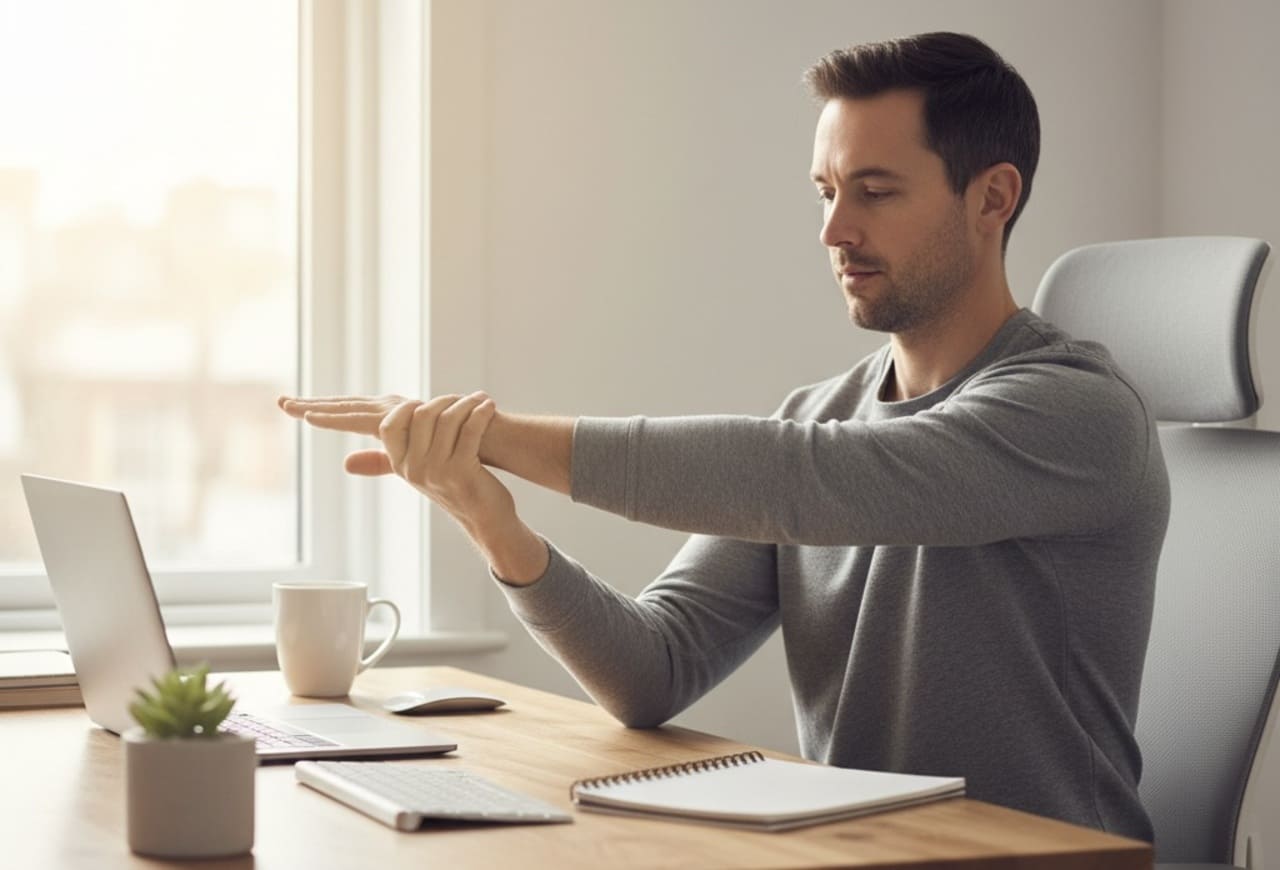
TL;DR
Daily wrist and forearm exercises can significantly extend the relief you feel after carpal tunnel massage by maintaining improved circulation, reducing nerve compression, and preventing muscle tension from rebuilding. Gentle movements like tendon glides, wrist circles, and prayer stretches performed every 2-3 hours help keep tissues mobile and support long-term symptom management when combined with proper ergonomics and professional care.
────────────────────────────────────────────────
Introduction
Carpal tunnel syndrome affects millions of people, causing pain, numbness, and tingling in the hands and wrists that interferes with daily activities. While massage therapy provides valuable relief by improving circulation and reducing muscle tension, the benefits are most lasting when supported by consistent daily movement patterns.
I’ve observed that patients who incorporate simple wrist and forearm exercises between massage sessions experience longer periods of comfort and better overall symptom management. These movements don’t require special equipment or extensive time commitment, just mindful attention to keeping your wrists and forearms healthy throughout the day.
You’ll learn evidence-based exercises that support the benefits of massage therapy, practical ways to integrate movement into your routine, and lifestyle adjustments that address the root causes of wrist tension rather than just treating symptoms.
How Does Carpal Tunnel Syndrome Affect Your Wrist and Forearm?
Carpal tunnel syndrome occurs when the median nerve becomes compressed as it passes through the carpal tunnel, a narrow passageway in your wrist formed by bones and ligaments. This compression creates the characteristic symptoms of numbness, tingling, and pain that often extends into your forearm.
Your forearm muscles play a crucial role in wrist function. The flexor muscles on the underside of your forearm control finger and wrist bending, while the extensor muscles on top control straightening movements. When these muscles become tight or imbalanced from repetitive activities, they create additional pressure on the median nerve and surrounding tissues.
Common daily activities that increase wrist tension include typing with bent wrists, gripping tools tightly, sleeping with flexed wrists, and performing repetitive motions without adequate breaks. Research shows that sustained awkward wrist positions and repetitive movements are primary risk factors for developing carpal tunnel symptoms.
Understanding this connection between forearm muscle tension and nerve compression helps explain why targeted exercises that address both areas provide more comprehensive relief than focusing on the wrist alone.
What Are the Most Effective Daily Wrist and Forearm Exercises for Carpal Tunnel Relief?
The most effective daily exercises combine gentle stretching with movement patterns that promote nerve mobility and reduce muscle tension. These exercises work by improving circulation, maintaining joint range of motion, and preventing adhesions that contribute to nerve compression.
Tendon Gliding Exercises
Tendon glides help maintain smooth movement of the tendons through the carpal tunnel while promoting nerve mobility. Start with your fingers straight, then slowly bend your fingers into a hook position, followed by a straight fist, and finally a full fist. Hold each position for 3 seconds and repeat 10 times every 2-3 hours.
Prayer and Reverse Prayer Stretches
Place your palms together in front of your chest as if praying, then slowly lower your hands while keeping palms together until you feel a gentle stretch in your forearms. Hold for 15-30 seconds. For the reverse prayer, place the backs of your hands together and gently press to stretch the opposite muscles.
Wrist Circles and Figure-8 Movements
Extend your arm forward and make slow circles with your wrist, 10 in each direction. Follow with figure-8 movements to promote mobility in all directions. These exercises help maintain joint lubrication and prevent stiffness.
Forearm Stretches
Extend your affected arm forward with your palm facing down. Use your other hand to gently bend your wrist downward until you feel a stretch along the top of your forearm. Hold for 15-30 seconds, then repeat with your palm facing up to stretch the underside muscles.
| Exercise | Frequency | Duration | Key Benefit |
| Tendon Glides | Every 2-3 hours | 10 repetitions | Nerve mobility |
| Prayer Stretches | 3-4 times daily | 15-30 seconds | Flexor muscle flexibility |
| Wrist Circles | Hourly during work | 10 each direction | Joint lubrication |
| Forearm Stretches | Morning and evening | 15-30 seconds each | Muscle tension relief |
How Do These Exercises Enhance Your Carpal Tunnel Massage Benefits?
Daily exercises work synergistically with massage therapy to maintain and extend the therapeutic benefits you receive during professional treatment sessions. Massage therapy for carpal tunnel improves circulation, reduces inflammation, and releases muscle tension, while daily exercises help maintain these improvements between sessions.
Massage therapy addresses deeper muscle layers and fascial restrictions that you cannot reach through self-care alone. However, without consistent movement to maintain the improved tissue mobility, muscles gradually return to their shortened, tense state. Daily exercises act as a bridge, preserving the benefits of professional treatment while gradually building your body’s capacity for sustained improvement.
The key is timing and progression. Gentle movements immediately after massage help integrate the treatment benefits, while regular daily exercises maintain tissue mobility and prevent the reformation of adhesions. Evidence indicates that combining manual therapy with exercise therapy provides superior outcomes compared to either approach alone.
Start slowly with 2-3 exercises twice daily, then gradually increase frequency as your tolerance improves. Listen to your body and avoid pushing through pain, as overstretching can create additional inflammation and setbacks.
What Lifestyle Habits Support Long-Term Wrist and Forearm Health?
Beyond specific exercises, your daily habits significantly influence wrist and forearm health. Small adjustments to how you work, sleep, and move throughout the day create an environment that supports healing and prevents symptom recurrence.
Ergonomic Workspace Setup
Position your keyboard and mouse so your wrists remain in a neutral position during use. Your keyboard should be at elbow height, with your wrists floating rather than resting on supports during typing. Take micro-breaks every 30 minutes to perform quick wrist movements and shake out tension.
Sleep Positioning
Wear a neutral wrist splint at night to prevent sleeping with bent wrists, which can worsen morning stiffness and numbness. Avoid sleeping on your hands or with your arms under pillows, as this creates additional pressure on the median nerve.
Activity Modification
When possible, alternate between tasks that require different hand positions and grip patterns. Use larger handles on tools and utensils to reduce grip force requirements. Studies show that reducing repetitive wrist flexion and grip force significantly decreases carpal tunnel symptoms over time.
Overall Health Factors
Stay well-hydrated to maintain tissue health and reduce inflammation. Regular cardiovascular exercise improves circulation throughout your body, including to your hands and wrists. Manage conditions like diabetes and thyroid disorders that increase carpal tunnel risk, as these systemic factors influence nerve health and healing capacity.
When Should You Seek Professional Assessment and Care?
While daily exercises and lifestyle modifications provide substantial benefits for many people, professional assessment becomes important when symptoms persist, worsen, or interfere with your daily activities and sleep quality.
Seek professional evaluation if you experience numbness that wakes you at night, difficulty gripping objects, or weakness in your thumb muscles. These symptoms suggest more significant nerve compression that requires comprehensive assessment and potentially specialized hand therapy intervention.
A thorough professional assessment includes evaluating your posture, workplace ergonomics, movement patterns, and any underlying conditions contributing to your symptoms. This comprehensive approach identifies specific factors affecting your individual situation and guides the development of a personalized treatment plan.
Professional care complements your daily self-management rather than replacing it. Manual therapy techniques, specific exercise prescription, and ergonomic guidance enhance the effectiveness of your home routine and accelerate your progress toward lasting relief.
Key Takeaways
• Daily wrist and forearm exercises performed every 2-3 hours help maintain the benefits of carpal tunnel massage by preserving improved circulation and tissue mobility between professional treatment sessions.
• Tendon gliding exercises, prayer stretches, wrist circles, and forearm stretches are evidence-based movements that specifically address nerve mobility and muscle tension associated with carpal tunnel syndrome.
• Ergonomic workspace setup with neutral wrist positioning, regular micro-breaks, and proper sleep positioning significantly reduce daily stress on the median nerve and supporting structures.
• Combining daily exercises with professional massage therapy provides superior long-term outcomes compared to either approach used alone, as each addresses different aspects of the condition.
• Professional assessment becomes necessary when symptoms include nighttime numbness, grip weakness, or thumb muscle weakness, as these indicate more significant nerve compression requiring specialized intervention.
• Consistency in performing gentle daily movements is more beneficial than occasional intensive stretching, as regular movement prevents tissue adhesions and maintains the therapeutic gains achieved through professional treatment.
Start Your Journey to Lasting Relief
Incorporating these daily wrist and forearm exercises into your routine represents an important step toward managing carpal tunnel symptoms and extending the benefits of professional massage therapy. Remember that improvement takes time and consistency, so start slowly and gradually build your routine as your comfort and confidence grow.
If you’re experiencing persistent wrist or forearm discomfort that interferes with your daily activities, consider working with experienced professionals who understand the complexities of carpal tunnel syndrome. Burnaby Heights Physio provides comprehensive assessment and treatment approaches that combine manual therapy, exercise prescription, and ergonomic guidance to support your journey toward lasting relief and improved function.
Frequently Asked Questions
What are the best daily wrist movements for carpal tunnel relief?
The most effective daily movements include tendon gliding exercises performed every 2-3 hours, gentle wrist circles throughout the workday, and prayer stretches held for 15-30 seconds three times daily. These exercises specifically target nerve mobility and muscle flexibility while being gentle enough for consistent daily use.
How often should I do forearm stretches to support wrist health?
Perform forearm stretches twice daily, holding each stretch for 15-30 seconds on both the flexor and extensor muscle groups. During periods of intensive hand use, add brief 10-15 second stretches every hour to prevent muscle tension from accumulating throughout the day.
Do daily exercises really extend the relief after carpal tunnel massage?
Yes, research supports that daily exercises help maintain the improved circulation, reduced inflammation, and enhanced tissue mobility achieved through massage therapy. Patients who perform consistent daily movements typically experience 2-3 times longer periods of symptom relief between professional treatment sessions compared to those who rely on massage alone.
